About 103 minutes
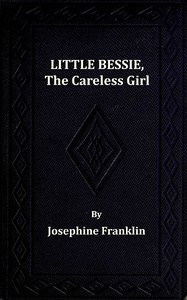
Little Bessie, the Careless Girl, or, Squirrels, Nuts, and Water-Cresses — Context and Discussion
Fairy Moral Tales
23,500 recorded words. 5 minutes difference from this book's estimate.
View Gutenberg source #43807
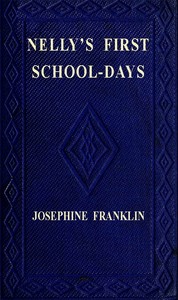
The catalog record for Nelly's First Schooldays — Background and Themes provides practical reading context through 24,789 words, 1 hr 48 min estimated reading time, and 3 detected text sections.
The text analysis averages about 17.7 words per sentence, while the detected sections provide another way to judge how the source is divided.
Project Gutenberg metadata also associates the work with “Conduct of life -- Juvenile fiction,” connecting these edition facts with the source record’s subject description.
Explore this collection
These alternatives are selected using recorded categories and estimated reading time.
About 103 minutes
Fairy Moral Tales
23,500 recorded words. 5 minutes difference from this book's estimate.
View Gutenberg source #43807About 134 minutes
Fairy Moral Tales
30,647 recorded words. 26 minutes difference from this book's estimate.
View Gutenberg source #43886About 183 minutes
Fairy Moral Tales
42,061 recorded words. 75 minutes difference from this book's estimate.
View Gutenberg source #43793Search stored excerpts and compare books → Choose by your preferences →
Choices use stored catalog measurements. Estimates vary with reading speed. A shared category is a catalog label, not a claim that two books have the same argument or literary quality.
Search reads excerpt text stored with this catalog and links to its associated Gutenberg record. The connection is stored in the site database; this tool does not recheck that every excerpt is word-for-word identical to that external record. Excerpt search does not cover every chapter and does not verify historical publication dates.
Catalog snapshot checked: 2026-09-25. Coverage: 98 public books, 98 available source excerpts.
Calculated from edition completeness, EPUB availability, text structure and catalogue metadata. Not a user rating.
Total of 100 points, scaled to a 2.5-5.0 range. Editions with an empty description or a missing EPUB file are not scored.
Public-domain source text
The source text is kept in the dedicated reader, separate from this catalogue record and its commentary.
Josephine Franklin opens Nelly's First Schooldays with a stark portrait of the Harrow family's poverty: their house is "time-worn," exposed to sun and wind, with only a stunted currant-bush for greenery. The narrator insists that neighbors, though respectful, "were far from conjecturing" that the family suffered "actual famine." This gap between outward respectability and inward desperation sets a pattern of hidden suffering that runs through the excerpts.
The Harrows' needlework is "celebrated far and near for its delicacy and exquisite finish," yet the work brings in too little money. Elinor, the eldest daughter, is "dreadfully wounded" at the thought of applying for a domestic position—a job that would require her to serve others. Franklin emphasizes the family's former higher station, making their fall more poignant. The tension between pride and necessity is palpable: the mother is "mild, patient-looking," but the family is losing strength. The narrative does not resolve this conflict in the excerpts; instead, it lingers on the quiet shame of genteel poverty.
In a long embedded story, a sick girl named Miss Elinor describes attending a rural church service. The scene is rich with specific details: farmers arrive from ten to fifteen miles away, bringing dinner-baskets; a colt pokes its head into the doorway; the minister preaches from the text "Consider the lilies of the field." The sermon is "not well delivered" but "pure and sound." Then a mouse appears, and the cat Wildfire kills it during the benediction. The cat's owner, Cousin Robert, thoughtlessly pats her. The listeners—Nelly and Melinda—respond with delight, asking "Did she eat it?" and wishing for such a cat. This episode contrasts the solemnity of worship with the comic, almost irreverent interruption, and shows how the children's attention fastens on the cat's cleverness rather than the sermon.
The frame narrative places Nelly and her friend Melinda as an audience within the book. They interrupt with eager questions—"And Wildfire,—where was Wildfire?"—and comment on the tale. Melinda speculates that the cat spared the mouse because "it was a church-mouse," and Nelly declares she will teach her own cat, Nancy, to be "knowing, just like her." Franklin thus models how children absorb moral and social lessons through embedded storytelling. The listeners' reactions—wonder, humor, imitation—suggest that the novel itself is designed to instruct through entertainment, not direct preaching.
Readers attentive to the novel's structure will notice how Franklin uses contrasts—between hidden hunger and visible respectability, between a flawed sermon and a vivid cat story—to engage young readers. The excerpts offer no resolution for the Harrows' plight, but the church episode hints at a community where even a poorly delivered sermon can have a good effect. The book rewards attention to its layered voices: the narrator, the sick girl, and the listening children each interpret events differently.
There is a kind of hunger in the Harrow children’s hidden poverty, a quiet pride that aches. I think of it when I recall the old mill’s secrets, how another boy’s summer held its own careful silences. Each story keeps a held breath, a knot needing untangling, patient as a library’s dust motes. Tom Fairfield in Camp; or, The Secret of the Old Mill — Background and Themes shares that same slow, truthful warmth.
Use these questions to collect your thoughts before moving on.